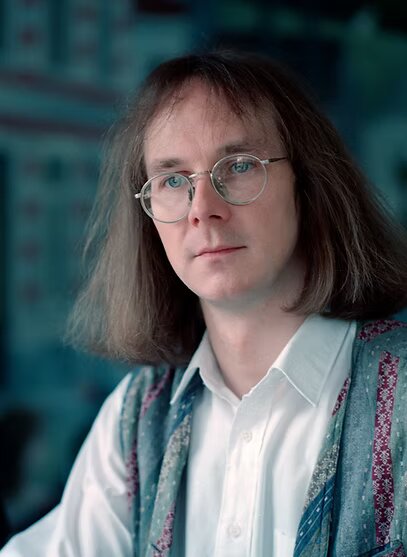
Jean-Luc Impe
After a classical musical training, Jean-Luc Impe gained a master's degree in musicology from the Université Libre de Bruxelles at a very young age. He then devoted himself to the lute, studying with Anthony Bailes and later at the Conservatoire National Supérieur de Strasbourg in the class of Yasunori Imamura. Quickly specialising in continuo playing on the theorbo and archlute, he was soon regularly called upon by many orchestras, soloists and chamber-music ensembles to take part in performances of operas, oratorios and passions.
Jean-Luc Impe was a prizewinner of the "Jeunes Talents Astoria" competition and of the Y. Menuhin Foundation.
As a soloist, he has recorded for the RTBF and for German and Italian radio, and has taken part in the activities of the ensembles Capilla Flamenca, Laudantes, Le Secret des Muses, La Grande Écurie et la Chambre du Roy…, both in Belgium and abroad (notably in Poland as a guest of the Kraków Academy). With the ensemble Il Cortegiano he recorded a series of CDs of Italian music for the EMS label. With these ensembles he performs frequently at the greatest baroque-music festivals (Festival of Flanders, Utrecht, Sablé-sur-Sarthe, Ambronay, Festival Estival de Paris…).
In 1989 he founded, with Catherine Daron, the Compagnie des Menus-Plaisirs du Roy, with which he collaborated on Alain Carré's productions and on the creation of an 18th-century marionette-opera show. The ensemble today is made up of internationally renowned musicians and brings together craftsmen and set designers, all specialised in early theatrical machinery and techniques.
After staging, with the greatest success, an 18th-century opéra-comique for the wooden players of the Saint-Germain and Saint-Laurent fairs in Paris, L'Ombre du Cocher-poète, and after devoting himself to reviving the parodies of operas and tragédies lyriques (Atys travesti) that were so numerous in the Age of Enlightenment, Jean-Luc Impe took a particular interest, guided by the most eminent specialists and with the ever-renewed help of the Watermael-Boitsfort Cultural Centre, in the staging, gesture and French pronunciation of the 17th and 18th centuries. At the instigation of the Ambronay Festival, and in collaboration with La Grande Écurie et la Chambre du Roy under Jean-Claude Malgoire, he staged Quinault and Lully's Alceste, presented for the first time since the 1739 revival both in its tragédie-lyrique version and, as burlesque counterpoint (as was customary in the 18th century), in parody form with marionettes, actors and singers (staging: Yves Hunstadt).
Jean-Luc Impe is currently preparing the complete edition of the theatrical corpus for the wooden players of the baroque period, as well as a doctoral thesis for the Université Libre de Bruxelles on the setting to music of marionette plays in the first half of the Age of Enlightenment. The first results of his research were published by the Institut International de la Marionnette of Charleville-Mézières in September 1994. He taught at the Nice Conservatory from 1997 to 2004 and currently gives lute courses at many workshops.
In 1997 the Ambronay Festival entrusted him with the direction of Quinault and Lully's tragédie lyrique Persée, and, for the 20th anniversary of the Sablé Festival, he staged Mouret's La Provençale as well as La Fille mal gardée by Favart and Duny.
Arte and La Cinquième devoted two themed evenings to him within the programme "Maestro". In 1998 he held a residency at the Centre Dramatique Hainuyer and in 1999 led a co-production with the Espace Senghor in Brussels on optical and magic-lantern shows in the Age of Enlightenment. The year 2000 was devoted to the recreation of Louis Raibaud's Idylle de la Reine d'Espagne. In 2001, Les Menus-Plaisirs du Roy and Jean-Luc Impe devised a fairground show around L'École des Amants by Niel and Fuzelier. Various universities and conservatories (Paris, Évora, Limoges, Rome, Brussels…) regularly call on Jean-Luc Impe for specialist colloquia or for regular courses. In 2003 and 2004 he staged Racine's Esther as well as a parody of Quinault and Lully's Roland. This latter production was revived together with the Théâtre Royal de Toone for the 2005 Printemps Baroque du Sablon. During that edition of the Brussels festival, he also acted as artistic adviser, reviving an 18th-century fair modelled on the Parisian Saint-Germain and Saint-Laurent. Since that year he has also co-directed a university research team focused on music in the baroque theatres of Paris. Within the activities of the Cellf (Sorbonne), he contributes to the edition of Lesage's complete works, to be published by Éditions Champion.
The year 2006 brought together Les Menus-Plaisirs du Roy and Le Concert Spirituel, conducted by Hervé Niquet, for an original and parodic Proserpine at the Cité de la Musique and the Château de Versailles. The projects for the 2007-2008 season centred, beyond the ensemble's concert activities, on a second parody of Cadmus et Hermione for the Centre de Musique Baroque de Versailles. For 2009 he devised a show bringing together the scenic and musical practice of "Nanguan", a refined art of the cities of southern China, with the French air de cour that was in vogue in the time of Louis XIII and Louis XIV.
Les Menus-Plaisirs, which he has directed since the ensemble's founding, prepared a series of recordings of the vaudevilles and tender little airs of the Grand Siècle, with the collaboration of soprano Céline Scheen (Parodies spirituelles et spiritualité en parodie / Musica Ficta) and tenor Stéphan Van Dyck (Boismortier des villes et des champs / Musica Ficta).
Since 2007, Jean-Luc Impe has also been the initiator of a European project aiming to bring together various musical databases on vaudevilles and popular songs in Europe. That same year, he held a residency in France, at "La Villa d'Aubilly", for his activities as researcher and writer.
For the tercentenary of Favart's birth, the Opéra-Comique in Paris entrusted Jean-Luc Impe with the parody of Mouret's La Provençale: La Fille mal gardée. Still at that institution, Les Menus-Plaisirs du Roy revived Atys travesti during W. Christie's production. After recreating a magic-lantern show around La Tentation de Saint Antoine in 2014, Les Menus-Plaisirs du Roy recorded, the following year, a programme dedicated to the Divertissements de Campagne of Joseph-Bodin de Boismortier. Then, in 2016, they revived the first Scottish opéra-comique, The Gentle Shepherd, on a libretto by A. Ramsay. Also in 2016, the company staged a show around Freemasonry in the Age of Enlightenment, with the renewed complicity of the musicians of Les Menus-Plaisirs du Roy and the Belgian Museum of Freemasonry. In 2017, Jean-Luc Impe and Paul Fustier, in co-production with the Monuments de France, published a hurdy-gurdy manuscript written for the inhabitants of the Château de Talcy around 1740. This publication was the occasion to perform in concert the pieces drawn from the collection and to organise a colloquium on musical practice in the provinces.
Also in 2017, Jean-Luc Impe took part in Marc Dugain's film "L'échange des princesses", based on the historical novel by Chantal Thomas.
The year 2018 allowed the company to revive and develop the magic-lantern show around T. Pedrini's voyages to China, and to offer the public a substantial part of the music written by European missionaries in the Middle Kingdom during the Age of Enlightenment. The "Chinese divertissements" played at the court of the Emperor of China and copied by Father Amiot in the mid-18th century were also on the programme.
Finally, in 2019, Les Menus-Plaisirs du Roy presented a small opera of masonic inspiration: Les Fra-Maçonnes (sic) by Poinsinet. The work was enhanced by the presence of a magic lantern and a paper theatre, and accompanied by a "German organ", a kind of barrel organ, joined by harpsichord, viol, theorbo, traverso and singers.
In 2020… little or nothing, owing to the health crisis. Happily, in 2021 the "Festin joyeux" project, baroque cookery in song, gave the ensemble fresh horizons; for the occasion it surrounded itself with the greatest specialists in Enlightenment gastronomy in order to prepare a series of short films for television. This long-term project, spanning the next three years, is set in the magnificent Château de Lavaux-Sainte-Anne.